M/s Trimble Mobility Solutions India Private Limited v. State of U.P. & Ors.
Allahabad High Court | Writ Tax No. 205 of 2024 | 2025 TAXSCAN (HC) 2295 | Decided on 07.10.2025 | Coram: Justice Piyush Agrawal
Background
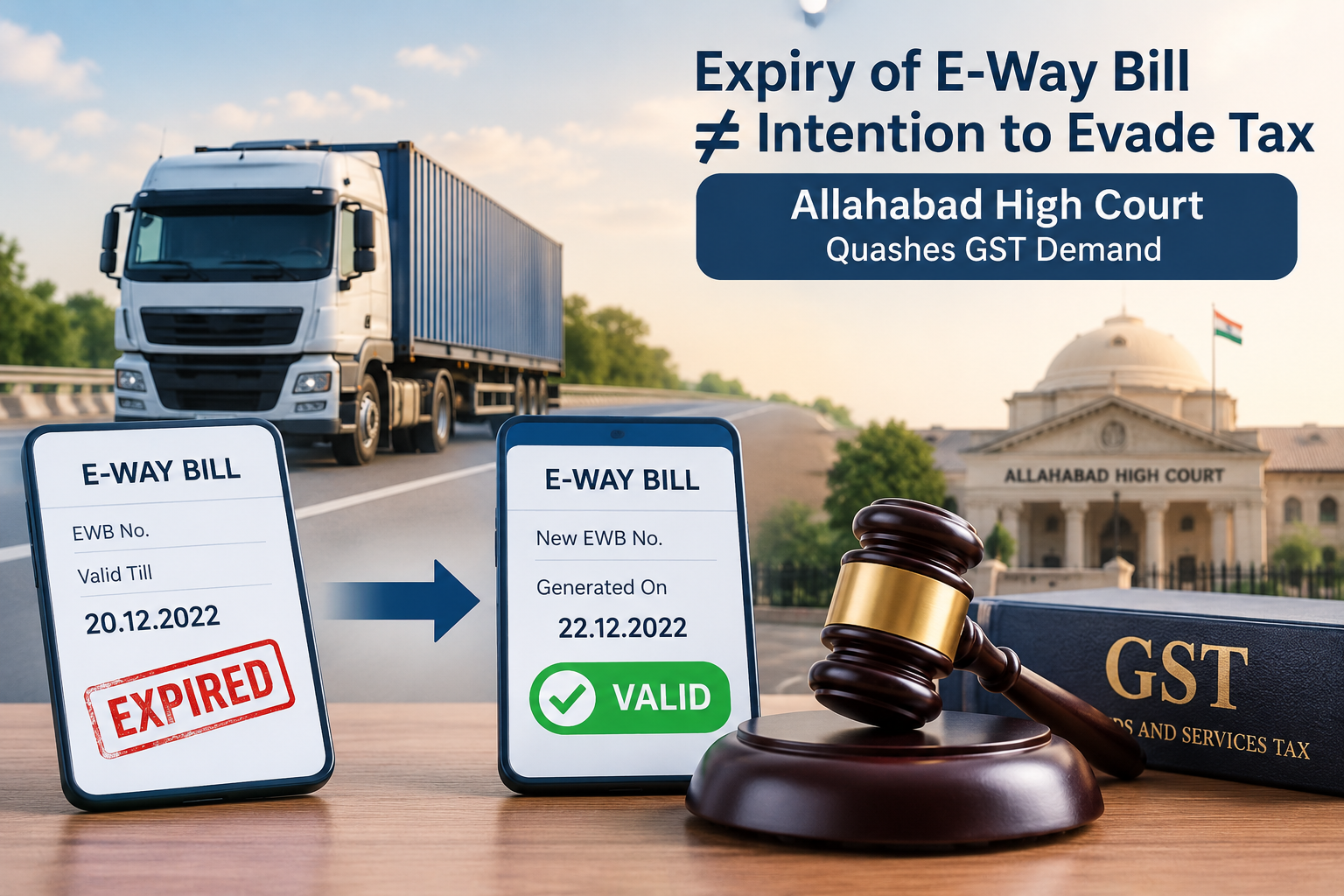
The Petitioner was transporting GPS devices under a valid tax invoice and e-way bill. During transit, the vehicle broke down and the goods had to be shifted to another vehicle, resulting in expiry of the original e-way bill. A new e-way bill was generated before the seizure order was passed. Despite this, the goods were detained and proceedings under Section 129(3) of the GST Act were initiated.
Issue
Whether mere expiry of an e-way bill due to circumstances such as vehicle breakdown, when a fresh e-way bill is generated before the seizure order, establishes an intention to evade tax.
Court's Reasoning and Decision
The Court noted that the goods were accompanied by a genuine tax invoice and e-way bill, and the Respondents did not dispute the vehicle breakdown or the subsequent generation of a new e-way bill. Relying on earlier decisions, the Court held that expiry of an e-way bill by itself does not establish an intention to evade payment of tax.
Accordingly, the Allahabad High Court quashed the impugned orders and allowed the writ petition.
(Above brief of the judgement prepared by Ms. Shweta Singh, Advocate, Dated: 12 Aug 2026)
Subscribe to receive latest news on GST, Customs, FEMA and legal developments.